
Charting the Course: Balancing Humanity and Technology in the Restaurant Industry

As we set our sights on the upcoming Restaurant Finance and Development Conference, a palpable sense of anticipation courses through the veins of the restaurant industry’s leaders. The air is thick with the aroma of change, a blend of uncertainty and opportunity, as CFOs and executives ponder the complex recipe for success in the coming year. The festive season looms, bringing with it reflections on labor costs, the puzzle of labor shortages, the allure of automation, and the relentless quest for robust earnings.

The Dawn of Automation and AI: An Inevitable Tide

Automation and AI are no longer mere specks on the horizon; they are the winds propelling the industry forward. From the humble beginnings of self-service kiosks to the futuristic visions of robotic chefs, technology has been entwining itself into the restaurant narrative with increasing tenacity. The future whispers promises of an unprecedented fusion of technology in daily operations, sparking both excitement and trepidation.

Humanity vs. Technology: The Delicate Dance

At the heart of this technological revolution lies a delicate dance between humanity and technology. The efficiency and cost savings of automation pirouette alluringly, tempting decision-makers with visions of streamlined operations and enhanced profitability. Yet, amidst this dance, we must not lose sight of the warmth and adaptability that define the soul of hospitality—the irreplaceable human touch.

People vs. Cost Savings: Navigating the Dichotomy

As the festive season casts its glow, the contrast between the joyous cheer of human interaction and the sterile precision of machines becomes starkly evident. Industry leaders find themselves navigating a dichotomy that is as challenging as it is crucial—the balance between people and cost savings. It is a strategic calculus that demands foresight, empathy, and a keen understanding of the industry’s heartbeat.

Your Compass Through the Tides of Change

In these transformative times, a trusted advisor is not just a luxury but a necessity. ZippyApp stands as a lighthouse amidst the stormy seas of change, offering guidance, expertise, and a steady hand. As the industry charts its course through the confluence of humanity and technology, ZippyApp emerges as an indispensable ally, helping businesses to navigate towards a future where technology enhances rather than eclipses the human spirit.

Embracing the Future with ZippyApp

As we look towards a horizon shimmering with technological advancements, the role of a trusted advisor becomes more crucial than ever. ZippyApp extends an invitation to join hands in embracing the future—a future where technology and humanity converge in harmony, ensuring that the restaurant industry continues to thrive as a beacon of warmth and hospitality in an increasingly automated world. Let’s chart this course together, steering towards a future that’s not only efficient but also rich with the human connection that lies at the heart of hospitality.

Embark on the Journey with ZippyApp

http://www.zippyapp.com

The Delicious Dance of Leadership and Culture in the Restaurant Industry

Leadership, as an ever-evolving subject, has had its fair share of ink spilled in recent times. You would think with the vast ocean of resources – a buffet of books, a banquet of articles – we would have the recipe to cook up effective leadership down pat. But that is far from the case. Leadership continues to be an enigma, a secret sauce that changes its flavor depending on the culture it marinates in.

Danny Meyer, the restaurateur extraordinaire and author of ‘Setting the Table’, serves us the perfect metaphor in the restaurant industry. Think of leadership as the head chef and culture as the kitchen. The chef can introduce new recipes, but if the kitchen isn’t well-stocked or the sous chefs are stuck in their ways, the new dishes may fail to taste as good as expected. So, is it the chef who shapes the kitchen, or the kitchen that influences the chef? A resounding “yes” would be the answer to both!

A Dash of Culture on Leadership

Meyer, in his storied career, would often come across long-serving managers saying, “I’ve been here longer than any chef, and I’ll outlast this one too.” This flavor of resistance is a common ingredient in large, established kitchens.

Negatively seasoned cultures can spoil even the most positive leadership recipes. However, good leadership, much like slow-cooking, can gradually turn the sour taste of negative culture sweet. All it needs are a few successful dishes and some patrons singing their praises.

In contrast, poor leadership can quickly ruin a deliciously positive culture. Meyer often recounts the tale of a previously successful eatery that plummeted under a profit-hungry owner. The man overworked his staff and underinvested in quality, eventually leading to a mass walkout of staff and, ultimately, shuttered doors.

Leadership as the Secret Recipe of Culture

A restaurant, much like any other company, mirrors the values of its leader. As we’ve seen in recent times, patrons and employees respond strongly to restaurants that neglect social issues or fail to address discrimination.

No alt text provided for this image

Leaders, like head chefs, need to ensure their kitchens are places of respect, safety, and equality. Danny Meyer himself exemplifies this principle, making sure his restaurants aren’t just diverse in their menus but also in their thinking and representation. His commitment to hospitality and service excellence shapes the culture of his entire restaurant empire.

Obstacles to Changing the Menu

The true roadblocks to changing a restaurant’s culture are internal – inflated egos, fear of the new, complacency, or rigid old beliefs. When a new recipe is introduced, there’s often pushback, even if the change improves the taste. Staff members might stick to the old recipe or gossip about the new one, actively resisting the change.

In a restaurant, just like in a remote work landscape, there’s less room for such negativity to brew. But as any experienced chef knows, if there’s even a tiny crack in the pot, the broth might leak. So, the question boils down to this – how can a head chef positively change the kitchen culture?

The Perfect Recipe for Positive Culture

People are drawn to a captivating vision, just like they are to a beautifully plated dish. They wish to follow a chef who values what they do. A good leader will extract 100% effort from their team, just like a good chef extracts 100% flavor from their ingredients. Here are some essential ingredients of a good leader:

Vision and Strategy: Just like a chef doesn’t merely instruct, a leader inspires. By setting a clear vision and strategic roadmap, leaders create a culture of engagement where everyone knows the restaurant’s direction and their role in its journey.

Ethics over empty words: Meyer always insists, “It’s not about what you say; it’s what you do.” Like the tantalizing aroma that wafts from a dish, the ethics of a leader permeate through their actions, laying the foundation for an ethical culture.

“It’s not about what you say; it’s what you do.”

Danny Meyer

Empowerment: Great leaders, like seasoned chefs, understand that the perfect recipe for empowerment involves three ingredients: responsibility, accountability, and authority. Leaders who encourage their team to make impactful decisions and shoulder the outcome of their choices inspire a culture of distributed leadership. Conversely, a kitchen with a micromanaging head chef is a kitchen where creativity is stifled and efficiency is bottlenecked, with all decisions waiting for approval from one person.

Lightening the mood, Meyer often shares a fun anecdote of his own. He once appointed a sous-chef to be in charge of creating the special for the night. Nervously, the young chef whipped up a dish that turned out to be a hit. The gleam in his eyes when Meyer complimented him was worth more than any praise or tip from a customer. It was a small yet significant step in transforming the culture of his kitchen – from micromanaged to empowered.

No alt text provided for this image

The dynamic dance between leadership and culture in the restaurant industry, as anywhere else, is an ongoing one. However, once leaders learn to create a harmonious rhythm between the two, they’ll find that they’re not just setting tables, they’re setting the stage for a culture of excellence, respect, and success.

3 Pillars of Successful Restaurant Staffing

Recruiting is as much a marketing practice as strategies you use to bring in customers. Just as you promote your brand and emphasize the delights of dining at your establishment, you need to delight candidates in order for them to become a part of your team.

You are utilizing latest technology to engage your patrons before, during, and after their dining experience. You are utilizing mobile technology because you have recognized that it is the device of choice for a significant majority of them. You’ve invested in managing your brand and you use every resource to engage your patrons.

Studies have also shown that many brands’ patrons actually make the best employees.

Well, let’s consider a few thoughts:

  • Are your recruiting efforts keeping up with today’s best practices – including mobile?
  • Are you still using reactive ad postings, praying to get applicants?
  • Are you measuring the effectiveness of your job postings by monitoring the click-to-apply ratio? Is it in low single digits?
  • Are you using the complex HRIS systems designed for the corporate world, which usually require dedicated recruiting staff?
  • Is your recruitment compliance process heavy, putting applicants through a long arduous process just to submit an application?

If you answered “yes” to any of these questions, it might be time to reconsider your recruitment strategies.

Staffing your restaurants with qualified staff relies on three major pillars. Weakness in any one adversely impacts your recruitment success.

Job Description

The job description is often the first impression most job seekers get about working at your establishment. Even if they are familiar with your brand, the job description is the first communication, which tells them what it’s like to work at your place.

We recommend taking this first impression opportunity to tell the candidate why it is great to be a part of your organization. Share with them how rewarding it can be, the flexible hours, opportunity to grow, learning about the wonderful culinary world, etc.

I have seen many job descriptions and many feel like what I call “a prison sentence” – several pages long, riddled with all of the harsh conditions of working at a restaurant. It is perfectly fine to have a job description with duties, which discloses the working conditions and the expectation as a part of the hiring process, but not the recruitment.

The job description should cover more of why a person should be a part of your team and how they can grow within your organization.

Get them excited to apply for your jobs.

Job Distribution

Job seekers have varying habits when it comes to searching for a job. They go to various job boards, Google, your own website, employer review sites, etc. to learn about your business and apply for your jobs. A study recently found that jobseekers often visit as many as 15 sites before they apply to a job.

Let’s not forget the location itself. A restaurant’s location is often the best marketing tool, invoking the following thought in the mind of the best passive applicant “… how wonderful it would be to work at this place.” Can a job seeker apply for a job at your location with their mobile device, with just a few clicks?

Is your recruitment marketing consistent across all these channels?

A comprehensive and optimized job distribution network is of the essence in getting your jobs in front of the right applicants. Your job descriptions need to be exciting, ever-present, optimized for search engines, and distributed to as many job boards as possible for the most exposure.

Applicant Engagement

Applicant engagement is the third pillar of successful staffing. It is critical for every organization to fully understand their entire application process. Consider the mindset of a job seeker looking for a near minimum wage job. Consider the fact that we are in a very competitive and tight labor market. Would you expect someone seeking a line cook position or a wait staff position to take 45 minutes to complete an application?

Ease of applicant engagement is directly correlated to the click-to-apply ratio. A recent study by ERE Media demonstrated that if the application process is less than 5 minutes, a click-to-apply ratio of 12.8% can be expected. However, if the application process exceeds 15 minutes, then the click-to-apply ratio drops below 4%. This is a significant decrease; couple that with the fact that it is generally the best applicants who abandon long application processes (because they have options) and you can see why this is important to you. 

Going through the entire application process from the viewpoint of an applicant enables you to observe the bottlenecks and points of friction. Consider the fact that every decision or click is an opportunity for the job seeker to abandon the application process altogether. 

Conclusion

Many organizations react to their recruitment when in crisis.  Implementing a comprehensive recruitment strategy enables you to have a very proactive recruiting process. A system covering the 3 Pillars with 24/7/365 recruitment provides a constant flow of great candidates, which provides options to truly elevate the quality of your team.

The idea of three pillars implies that the three practices must be employed for the success in staffing. It is essential to address all three simultaneously to achieve the best results. We consider each one the pillars a major topic and worthy of its own comprehensive coverage.

Please look for our upcoming blogs covering each one in more depth.

Celebrity First Hourly Jobs

Did you know some of today’s most popular celebrities started their careers on the same path that you are going down — through the hourly workforce? In fact, studies have shown that one in every eight American workers has been employed by McDonald’s. Believe it or not, your not so glamorous restaurant job can be your most defining, and set you on the path to bigger and better things.

A new year is on the horizon – can you believe we are just 6 weeks away from 2016? In the next few weeks as we approach the new year, we are going to provide advice to help set you up on a successful career path. Today’s Blog will take a look at celebrity first hourly jobs, to help show that your first job can be the most crucial of your career path. So whether it’s a quick-service restaurant or retail store at the mall, every person has to start somewhere in their career. Here are a few big names you won’t believe started the same way you are!

Harry Styles: Bakery Assistant
Before hitting it big with One Direction, Harry Styles worked at a bakery.

Harry Styles.png

Get started in your career like Harry Styles — we have Bakery jobs on our Job Board!

Carly Rae Jepsen: Barista 
Before her viral music hit, Call Me Maybe, Carly Rae Jepsen worked as a Barista to pay for rent while she pursued her musical career.

Carly Rae

Check out our Barista jobs on on Job Board!

Rachel McAdams: Worked at McDonald’s
Before The Notebook and Dear John, Rachel McAdams worked at McDonald’s. She describes McDonald’s as “a great place to work.”

Rachel McAdams.jpg

Check our Job Board for open jobs at McDonald’s near you!

Crystal Reed: Ice Cream Scooper
Before her days starring in Teen Wolf, Crystal Reed scooped ice cream.

Crystal Reed

Check out our jobs at CREAM Nation, Tin Pot Creamery, and other sweet shops here.

Beyoncé: Hair Styling Assistant
Before she ruled the world, Beyoncé swept hair off the floor of her mother’s hair salon.

Beyonce

Who wouldn’t want to follow in Beyonce’s footsteps? We have Hair Stylist jobs near you on our Job Board!

Madonna: Jelly-Filler for Dunkin’ Donuts
Before she was the Material Girl of the 80’s, Madonna worked a minimum wage job at Dunkin’  Donuts.

Madonna

To get started in your career like Madonna, check out our jobs at Dunkin’ Donuts and Krispy Kreme here.

Jim Carey & Jon Bon Jovi: Worked as Janitors
Before Jim Carey started working as a stand-up comedian and Jon Bon Jovi was livin’ on a prayer, they used to work as Janitors to support themselves and their families.

Screen Shot 2015-11-15 at 8.10.37 PM.png

We have  Janitorial or Custodian job opportunities on our Job Board!

QR-Scanning App Helps Restaurant Owners Find Employees

[Originally posted to pizzamarketplace.com]

ZippyApp announced its new online marketplace for employers and hourly workers that’s leveraging mobile technology and social media to help employers recruit and hire well-qualified employees. Kamyar Faron, a Millennial hiring expert and ZippyApp CEO, created the app to make it as easy as possible for restaurants to hire more efficiently and job seekers to land jobs more quickly using their smartphones, according to a company announcement.

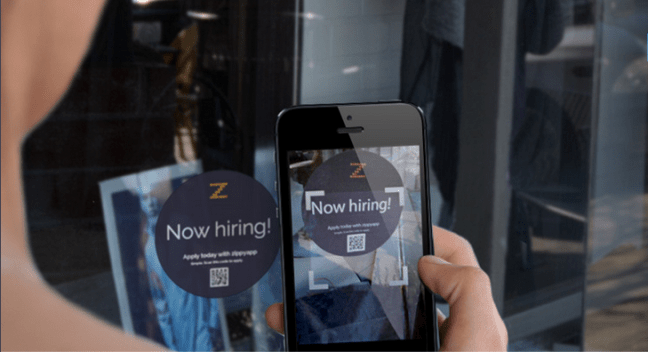
Rather than filling out multiple employment applications all asking for identical information, ZippyApp enables job seekers to complete one common job application online and submit it via smartphone, tablet or computer to apply to any restaurant in ZippyApp’s employer network. Job seekers learn about job openings from ZippyApp’s employer marketplace, and Facebook and Twitter feeds, and wherever they see ZippyApp’s window decal at an employer’s restaurant, they can scan the decal’s QR code with their smartphone and instantly apply for a job.

Restaurants using ZippyApp’s mobile tech tools can more easily recruit qualified, local job applicants, and more efficiently manage the interview and hiring process, the announcement stated, and Counter Burger, Panera Bread, Krispy Kreme, Jamba Juice and McDonald’s are among ZippyApp’s early adopters.

The 6 Success Factors for a New Job

Congratulations on getting the job! Although you have passed through enough hurdles already – from having an eye-catching application to mastering pre-interview and interview etiquette –landing the job doesn’t mean your efforts should stop. In fact, the first few months at a new job are oftentimes a trial period to ensure the company has hired the right person. Even though everyone’s workplace is different, we all face the same challenges when we start a new job. Become a rockstar in your new position with these success tips!

  • Accept the “Newbie” status (and the grunt work that comes along with it). Chances are when you start a new job you’ll be asked to do some grunt work before you have any real responsibility. Showing good work ethic no matter what the task is you are assigned to do is what will set you apart from others. This means no complaining or disagreeing.
  • Ask questions. Managers like when you ask questions as it shows you are taking your new role seriously. Your manager wants to see you do your job correctly (they did hire you after all!), and the best way to make sure that happens is to ask questions. Be sure to actively listen and restate what your manager answers back to avoid miscommunication.
  • Take initiative. Asking questions when you need to and wanting to learn are great qualities to posses, but so is taking initiative. If you see an area that is lacking or something that needs to be done – like napkins that need to be folded or silverware that needs to be put away –doing it rather than asking permission will show you take initiative, which is another excellent quality to have.
  • Go above and beyond. Have you heard the term, “The more you put in, the more you get out?” Well this is especially true of any job you hold. Oftentimes, it’s not the person who does only their job that gets promoted – it’s the person who goes above and beyond what their role is. This means that even if a certain task is not in your job description, you do it — especially if your manager asks.
  • Keep organized and never miss a deadline. Being on time, getting your work done, and keeping yourself organized are important factors when starting a new job. Don’t come in late and make sure you always complete your tasks before you leave for the day.
  • Break time and time off etiquette. Although companies are required to give their employees breaks and lunches, asking when your next break will be does not leave a good impression. Your employer will believe you just see the job as a paycheck – not one that you enjoy doing. The same goes for time-off requests. If you already have a vacation planned before you accept your new position, be sure to let your new manager know as soon as possible (when you accept the position is the best time). Otherwise, wait until your 90-day trial period is over until you start asking for time off.

Do you have any success tips or advice to share? We’d love to hear from you! Post your comment below.